Garlic Butter Pan-Seared Salmon
Crispy-skinned Atlantic salmon fillets pan-seared in minutes, basted with foamy garlic butter, fresh dill, and bright lemon juice.
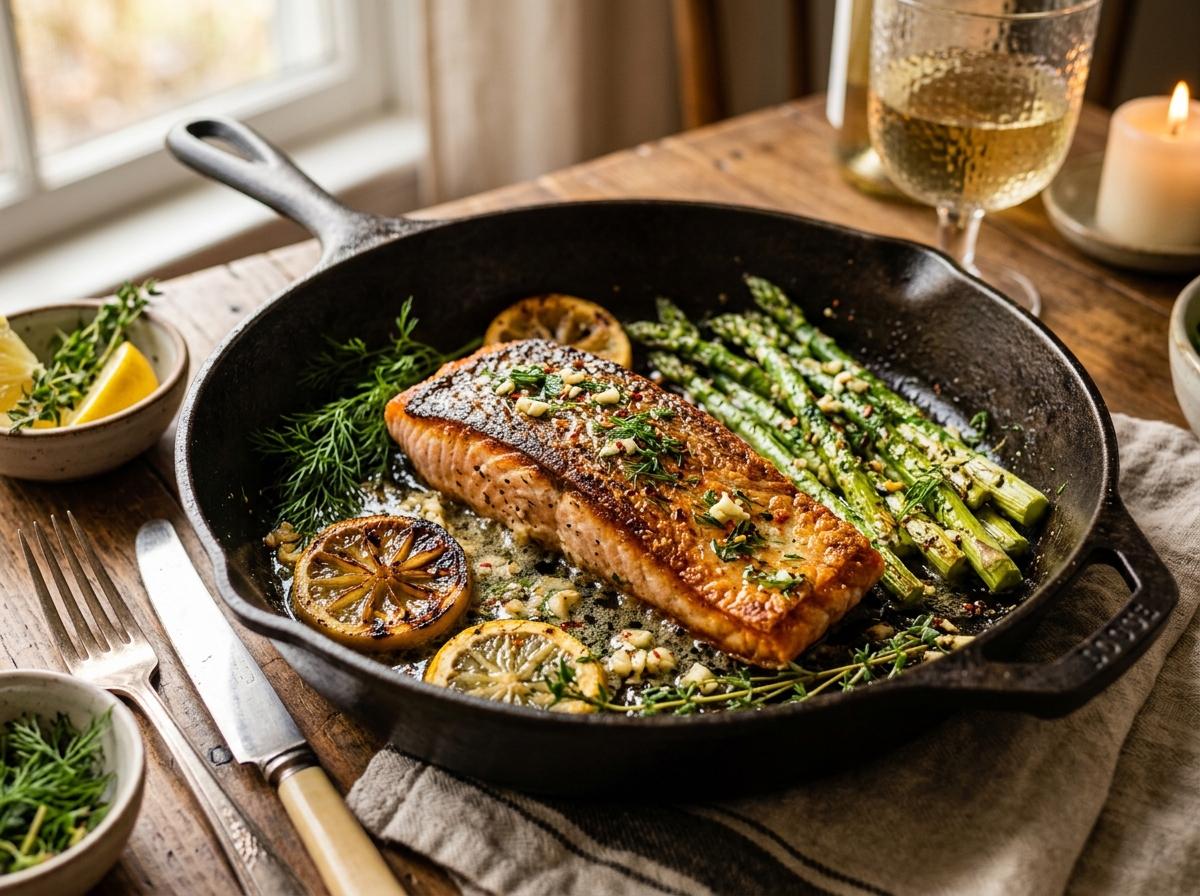
Pan-seared salmon is the quintessential fast weeknight luxury: cooking in twelve minutes with crisp, glass-like skin and a tender, flaky medium-rare center.
The secret to shatteringly crisp salmon skin is thoroughly drying the fish and cooking it skin-side down for seventy percent of the total time under gentle initial pressure.
Finished with a quick pan-baste of foaming butter, minced garlic, fresh lemon juice, and aromatic dill, this method produces restaurant results every time.
Why This Method Works
Desiccating Skin with Salt & Paper Towels
Moisture is the enemy of crisp skin. Salting and patting dry ensures direct contact heat crisps the skin rather than steaming it.
Gentle Initial Spatula Pressure
Salmon fillets curl as muscle fibers heat up. Pressing gently with a fish spatula for the first 30 seconds keeps the skin flat against the hot pan.
70/30 Cooking Ratio
Cooking skin-side down for 4 to 5 minutes shields the delicate flesh from harsh heat; flipping for just 2 minutes finishes the salmon to a succulent medium.
Ingredient Notes & Regional Substitutions
Center-Cut Salmon Fillets
Center-cut fillets have uniform thickness (about 1 to 1.25 inches), ensuring even cooking.
Regional naming: Atlantic or wild salmon fillets.
Substitutions: Steelhead trout or Arctic char.
Fresh Dill & Lemon
Fresh dill and lemon juice provide herbaceous brightness that cuts the rich salmon oil.
Regional naming: Fresh dill and unwaxed lemons.
Substitutions: Fresh tarragon or chives.
Garlic Butter Pan-Seared Salmon
Ingredients
- 4 center-cut skin-on salmon fillets (6 ounces each)
- 1 teaspoon kosher salt, divided
- 1/2 teaspoon freshly cracked black pepper
- 1.5 tablespoons olive oil or avocado oil
- 3 tablespoons unsalted butter
- 4 cloves garlic, minced
- 2 tablespoons fresh lemon juice
- 2 tablespoons chopped fresh dill
- Lemon wedges, for serving
Instructions
-
Dry and Season Fillets
Use paper towels to pat the salmon fillets thoroughly dry on both sides, especially the skin. Season meat and skin evenly with kosher salt and black pepper.
Visual Cue Skin should feel completely dry with no surface moisture. -
Heat Skillet to Shimmering
Heat oil in a large 12-inch stainless steel or cast iron skillet over medium-high heat until shimmering (hot, but not smoking).
Visual Cue Oil moves across pan like water with faint ripples. -
Sear Skin-Side Down
Carefully lay salmon fillets skin-side down into the hot oil away from you. Immediately press down gently on each fillet with a flexible fish spatula for 20 seconds to prevent curling. Lower heat to medium and cook undisturbed for 4 to 5 minutes.
Visual Cue You will see opacity creeping up the side of the fillet from bottom to top. -
Flip Fillets
Gently slide spatula under skin. If it sticks, give it 30 more seconds until it releases cleanly. Flip fillets onto the second side and cook for 1.5 to 2 minutes.
Visual Cue Crisp, golden-brown skin facing up. -
Add Butter, Garlic & Baste
Reduce heat to low. Add butter and minced garlic to the skillet. Once foaming, tilt pan and spoon garlic butter over the salmon for 1 minute. Squeeze lemon juice over top and remove from heat.
Texture Cue Salmon registers 125°F to 130°F (52°C–54°C) for moist medium flaky texture. -
Garnish and Serve
Scatter chopped fresh dill over salmon and spoon remaining pan garlic butter over fillets. Serve immediately with lemon wedges.
Texture Cue Crisp, crackling skin with tender, buttery interior.
Estimated Nutrition (Per Serving)
Calculated using USDA ingredient data estimates; actual values will vary depending on specific brands.
Common Mistakes to Avoid
Recipe Variations
Caper & Lemon Butter Salmon
Add 1 tablespoon of drained capers to the foaming butter along with the garlic.
Blackened Salmon
Season fillets generously with smoked paprika, thyme, garlic powder, and cayenne before pan-searing.
Serving Suggestions
- Serve alongside steamed asparagus, roasted baby potatoes, or over fluffy jasmine rice.
- Pair with a chilled glass of Pinot Grigio or dry rosé.
Storage, Reheating & Freezing Guidance
Refrigeration: Refrigerate in a sealed container for up to 2 days.
Freezing: Cooked salmon does not freeze well; enjoy fresh.
Reheating: Reheat gently in a 300°F (150°C) oven for 6 to 8 minutes, or enjoy cold flaked into salads.
Frequently Asked Questions
Complementary Recipes You Might Enjoy
Dishes with similar techniques, seasonal affinities, or ideal table pairings.
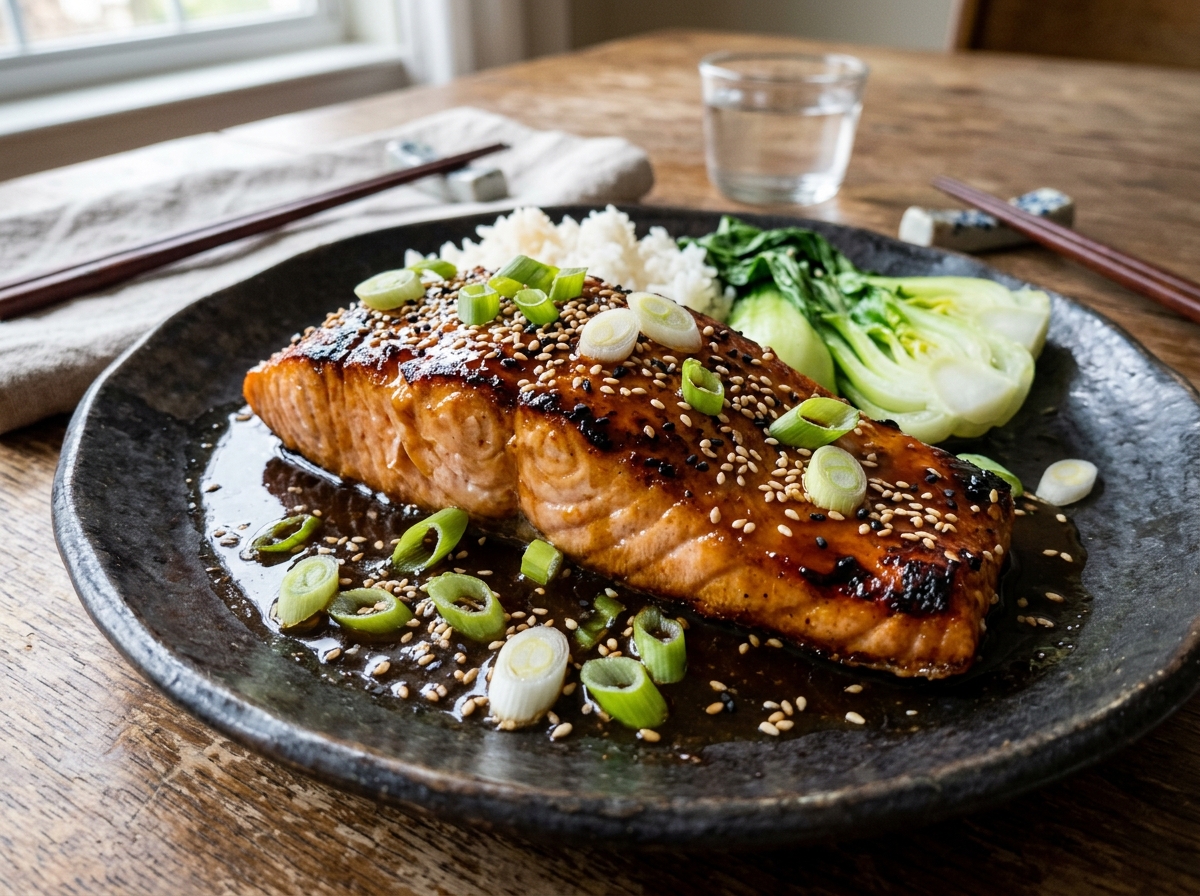
Pan-Glazed Honey Soy Salmon
Pan-seared salmon fillets coated in a glossy, caramelized reduction of tamari soy sauce, clover honey, fresh grated ginger, garlic, and toasted sesame.
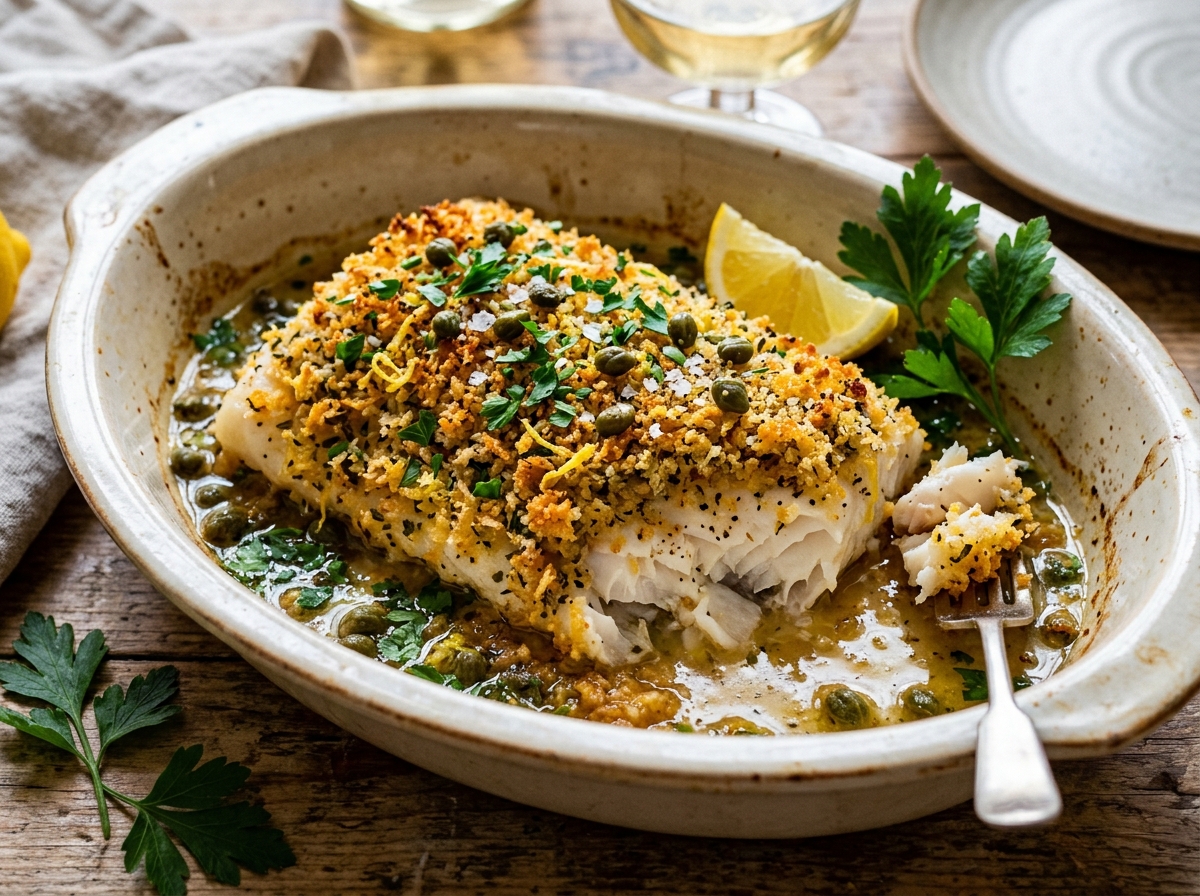
Baked Lemon Herb Cod with Crispy Panko
Flaky, tender Atlantic cod fillets topped with golden garlic-herb butter panko breadcrumbs, baked in a bright white wine and lemon sauce.
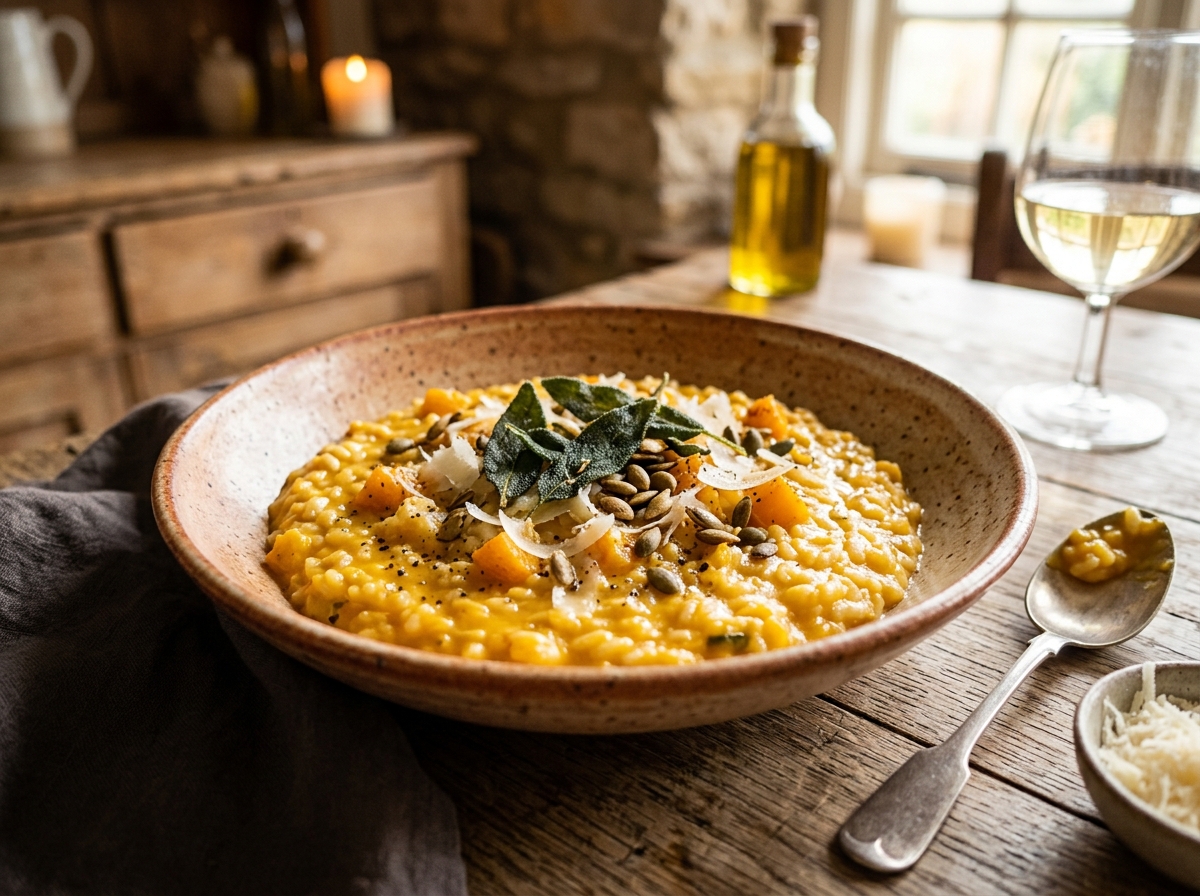
Creamy Roasted Butternut Squash Risotto
Slow-stirred Carnaroli or Arborio rice with sweet caramelized butternut squash puree, browned sage butter, dry white wine, and freshly grated Parmigiano-Reggiano.
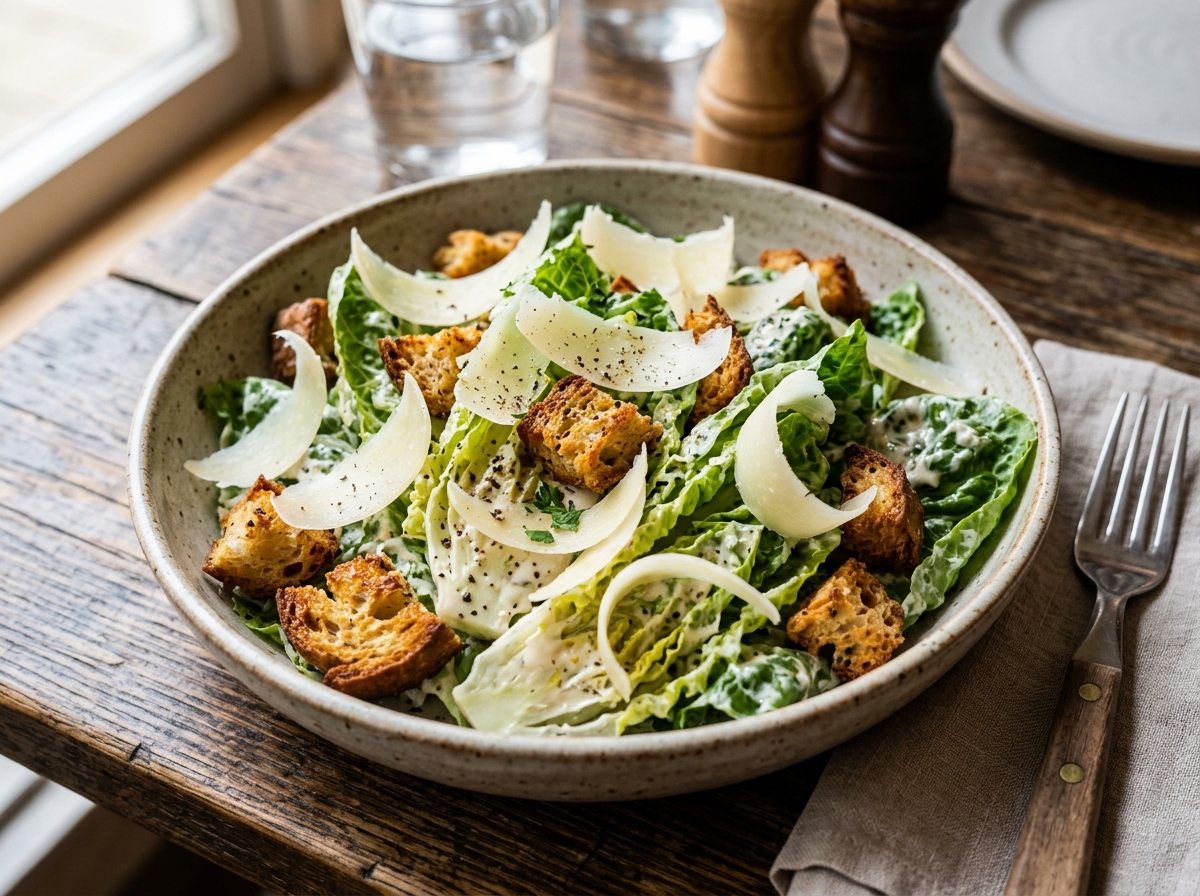
Classic Caesar Salad with Homemade Dressing
Crisp romaine hearts tossed in an authentic emulsion of fresh garlic, anchovy fillets, egg yolk, Dijon mustard, lemon juice, Parmigiano-Reggiano, and golden sourdough croutons.